Follow-up Report: “Closing the Whole Grain Gap: How Industry Can Drive Change”
Asia-Pacific webinar | 17 November 2026
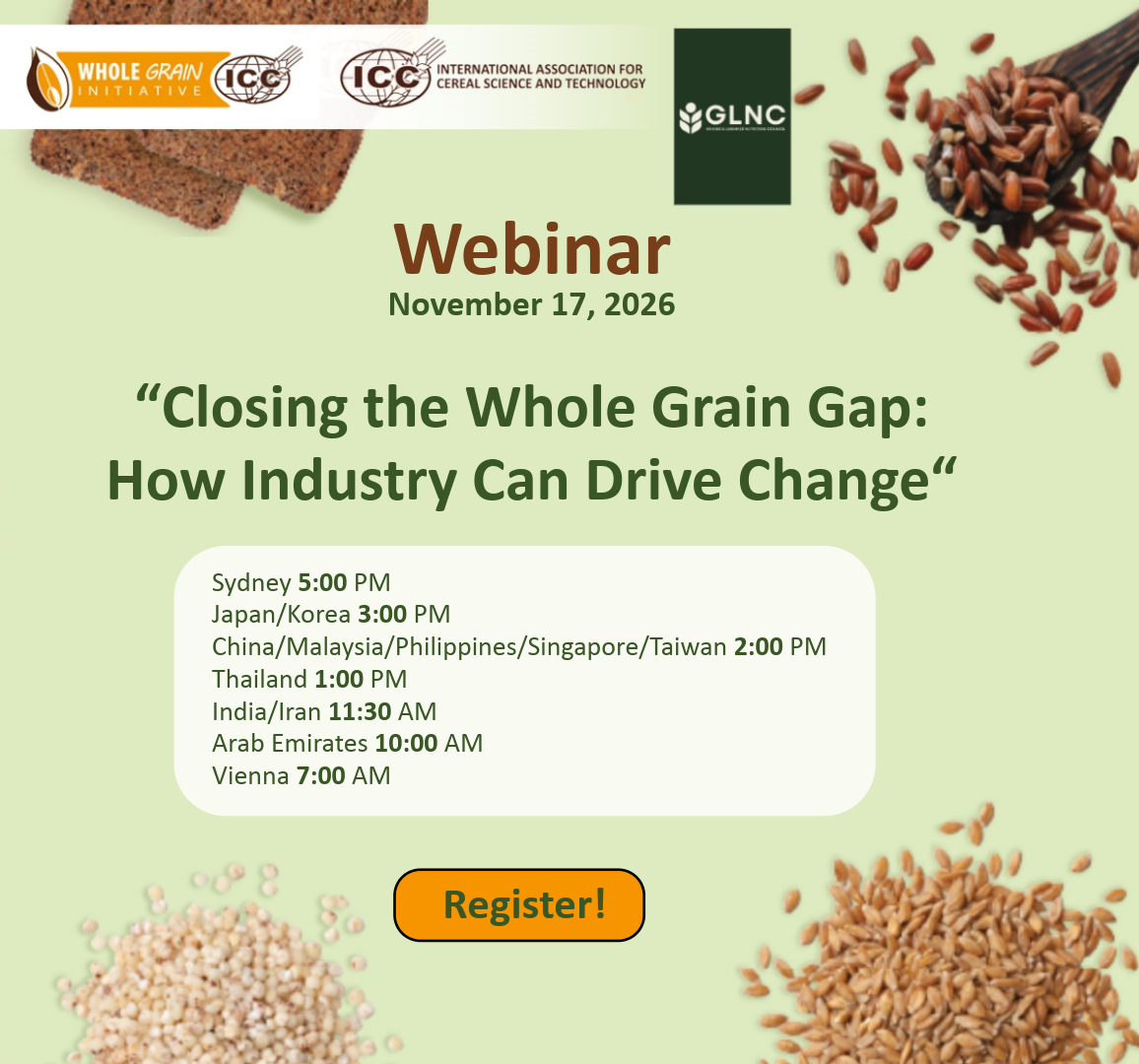
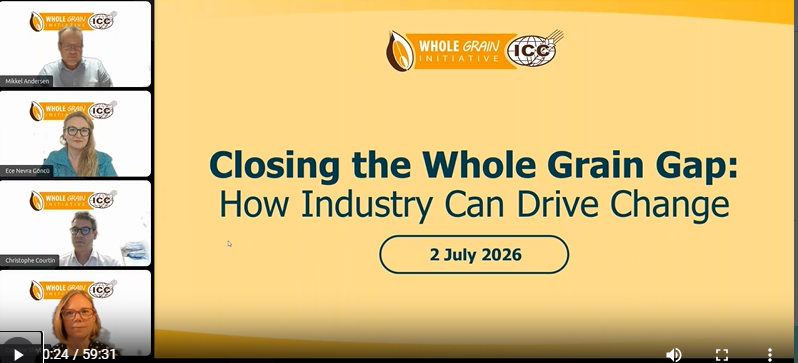
Held as part of the International Whole Grain Day celebrations, the webinar “Closing the Whole Grain Gap: How Industry Can Drive Change” brought together perspectives from nutrition science, regulation and industry. Organised by the ICC Whole Grain Initiative (WGI) in association with the Grains and Legumes Nutrition Council (GLNC), Australia, the session explored practical opportunities to increase whole grain consumption across Asia-Pacific.
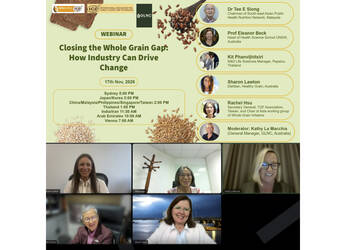
Moderated by Kathy La Macchia, General Manager of GLNC, the webinar highlighted the need to connect scientific evidence with clearer regulations, appealing products and culturally relevant consumer communication. A central message emerged: closing the whole grain gap requires coordinated action across the food system.
Clearer regulations to support progress
Dr Tee E Siong, Chairman of the South-east Asian Public Health Nutrition Network, presented findings from a survey conducted by the WGI Asia-Pacific Working Group. Of the 16 jurisdictions surveyed, six—Australia, New Zealand, Malaysia, China, Singapore and Taiwan—were reported to have specific whole grain regulatory provisions, although their approaches varied considerably.
While definitions generally agreed that whole grains should retain the bran, germ and endosperm in their original proportions, minimum content requirements and labelling rules differed. Dr Tee stressed that greater regulatory convergence could help consumers identify whole grain products, provide clearer guidance for manufacturers and improve consistency in research. He also highlighted opportunities through dietary guidelines and public food procurement in schools, universities and hospitals. A manuscript presenting the survey findings was being prepared.
Translating health evidence into everyday choices
Professor Eleanor Beck, Head of the School of Health Sciences at the University of New South Wales, discussed research linking whole grain intake with health outcomes. Drawing on an analysis encompassing 57 studies, she presented approximately 50 grams of whole grain ingredient per day as a pragmatic research-based target, with particularly important potential benefits for people increasing their intake from very low levels.
She emphasised that grams of whole grain ingredient are not equivalent to grams of a food containing whole grains. This distinction is important for both research and dietary advice. Planned research in Australia and Vietnam will explore how food images, serving examples and practical swaps can translate scientific targets into understandable consumer messages. Suitable products must also be available, affordable and appealing for recommendations to become achievable choices.
Innovation through familiar food formats
Sharon Lawton, registered nutritionist, food scientist and technical consultant at The Healthy Grain, showcased applications of BARLEYMAX, a barley developed by CSIRO through conventional plant breeding. Examples included burger buns at MOS Burger in Taiwan, grain-and-legume mixes and FamilyMart rice-ball products in Japan, and oat-based products and barley flakes in Australia.
The examples demonstrated how whole grains can be incorporated into familiar eating occasions rather than requiring entirely new habits. Lawton highlighted taste, texture and convenience as essential to encouraging repeat purchases.
A planned presentation by Kit Phanvijhitsiri of PepsiCo, Thailand, on the Quaker Oats 5-in-1 Multigrain Range could not be delivered because of technical difficulties.
Regional collaboration and priorities
Rachel Hsu, Secretary General of the TQF Association, Taiwan, and Chair of the WGI Asia-Pacific Working Group, introduced the group’s activities. With approximately 20 members representing 12 countries and territories at the time of the webinar, the group connects expertise in research, nutrition, regulation and food production. Priorities include the regional regulatory review, sharing certification experience, improving product quality and variety, and strengthening consumer education.
The closing panel identified several priorities for further action:
- Support clearer definitions, transparent labelling and greater regulatory convergence.
- Translate scientific recommendations into practical, culturally appropriate food choices.
- Develop products that combine nutritional value with taste and convenience.
- Extend whole grain availability beyond packaged foods to restaurants, hawker centres and other eating-out settings.
- Address misconceptions and help consumers recognise whole grain products.
The webinar underlined that evidence, policy, innovation and education must progress together. Participants were encouraged to contribute to the WGI Asia-Pacific Working Group and support collaborative initiatives that make whole grains a more accessible and familiar part of everyday diets.