
Activities of the ICC Whole Grain Initiative
The following ICC Whole Grain Initiative international working groups are actively engaged in driving whole grain acceptance and increasing whole grain product availability worldwide:
1. Food Policy working group
2. Processing, Reformulation, & Supply Chain Engagement working group
3. Communications working group
4. Economic Evaluation & Affordability working group
5. Asia-Pacific Region working group
Additionally, the WGI is supporting a “special project” on the topic of Whole Grains & Sustainability, partnering with environmental scientists and other experts through an interdisciplinary approach.
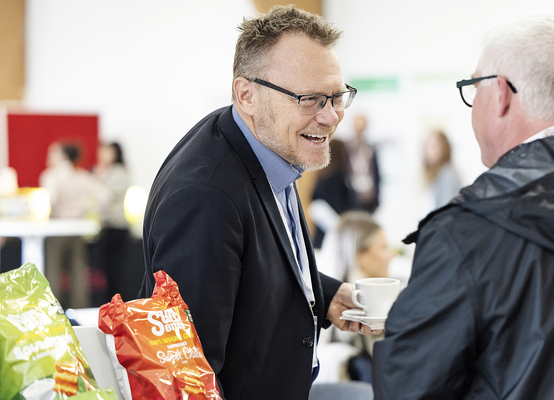
Chair Mikkel Andersen
2. Processing, Reformulation, and Supply Chain Engagement working group
Processing can enhance nutritional value, improve sensory properties, and ensure the safety of whole grain ingredients. Gradual reformulation strategies that retain familiar taste and texture are often more acceptable to consumers as they begin to shift toward healthier choices. This group aims to provide manufacturers with the tools they need to utilize more whole grain ingredients in their product portfolios.
Additionally, recognizing that engagement from commercial stakeholders is especially critical if we are to successfully shift mainstream diets to greater whole grain intake, this group aims to build stronger relationships throughout the food supply chain. It hopes to help support the creation of more Public-Private Partnerships between government, health organizations, and industry participants in future years.
recent activities:
In 2026 we will focus on strengthening meaningful private‑sector involvement through a limited number of high‑impact, scalable activities. The overall objective is to convert increasing public‑health, sustainability, and policy momentum around whole grains into concrete industry action and new engagement with WGI.
A central pillar of the 2026 plan is the launch and repetition of targeted recruitment webinars aimed exclusively at private‑sector stakeholders. These webinars use a standardized pitch that clearly articulates why whole grains matter, why industry should care, and how companies can engage through WGI. The first webinar is scheduled for 17 March 2026 and invitations have been sent to a significant number of probable target stakeholders. After the first webinar the format will be evaluated and repeated to maximize reach, learning, and impact.
In parallel, the working group will explore WGI participation at selected European industry trade fairs as a complementary engagement channel. The aim is to leverage existing food and ingredient events to present the WGI proposition using a presentation closely aligned with the recruitment webinar pitch. This approach is also intended to broaden visibility among industry actors. The idea is to have local WGI representatives do the presentations, but travel and potential accommodation costs will have to be considered vs. the WGI/ICC budget once we know the scope of the workstream.
A third workstream focuses on processing and reformulation and to showcase practical, industry relevant success stories. The intention is to develop a number of short, focused stand-up talks targeting SMEs. These sessions are designed as concise, local language success stories that demonstrate how palatable whole grain foods can be produced in practice, helping to lower technical and perceptual barriers to reformulation and adoption. Scope, resources and budget also needs to be considered here.
In addition, a fourth workstream will focus on the so‑called UPF and whole‑grain dilemma. This workstream aims to explore and clarify how whole grain foods are positioned and perceived within the broader UPF debate and the unnuanced processing-based food classification systems that are becoming more and more prevalent. The objective is to develop clearer narratives and evidence‑based perspectives via a number of communication deliverables that can mitigate the tension between processing, health perceptions, and whole‑grain promotion.
Across all activities, the working group will move toward clearer definition of deliverables, responsibilities, and measurable outcomes, ensuring that industry engagement initiatives contribute directly to the overall WGI 2026 objectives and can be translated into concrete KPIs over time.
• Laura proposed a case study on wholegrain pasta produced using a “grain-to-grain” approach, following debranning, micronization, and turboseparation of durum wheat and einkorn. The example would also include sensory evaluation results of the final pasta product.
• Bernard suggested focusing on sourdough fermentation for breadmaking, including the use of whole kernels or germinated cereals as a strategy to improve texture and flavor.
• Celine proposed presenting a concise overview of the most transferable outcomes from current or past European research projects related to whole grains.
• Wisse suggested a webinar on the enrichment of foods with bioactive compounds extracted from milling by‑products and bran, highlighting valorization strategies.
• Roman suggested a millet case.WHO: Members of the WGI from the countries of the selected fairs, who speak the local language.
WHERE and WHEN:
TUTTOFOOD 2026
Milan, Italy. May 11–14, 2026
A major international food & beverage trade fair with a comprehensive presence of exhibitors from across the agrifood sector, including significant international representation and diverse product categories that frequently include cereals, grains, and related ingredient suppliers.
Food 4 Future | ExpoFoodTech 2026
Bilbao, Spain. May 27–28, 2026
Official website: https://www.expofoodtech.com/
Focused on technological innovation for the food industry: automation, AI, food processing, packaging, and sustainability.
Free From & Specialty Food 2026
Vienna, Austria. June 16–17, 2026
Official website: https://vienna.freefromfoodexpo.com/
A European B2B trade fair dedicated to Free From, plant‑based, organic, functional, and specialty foods. It brings together buyers and industry professionals and is particularly relevant for companies working with sustainable and health‑oriented food products.
SIAL Paris 2026
Paris, France. October 17–21, 2026
One of the largest global food processing and innovation trade fairs, attracting producers, buyers, and industry decision-makers — and specifically offering strong opportunities for pulse, grain and cereal brands to gain visibility and business exposure on an international scale.
Once the fairs of interest among those listed and scheduled for 2026 have been selected, it is necessary to assess both the feasibility of participation by the WGI and the possibility of being reimbursed for travel and accommodation.
UPF sub-groug summary
The subgroup focused on the topic of so-called ultra-processed foods will focus its workstream on addressing the complexities and misconceptions surrounding proposed classifications of foods using processing-based measures. It will focus on communicating the benefits of whole grain foods, including those sometimes classified as ultra-processed.
In 2026, this subgroup will produce a concise position paper and a more detailed white paper, both grounded in scientific evidence, to clarify the nutritional benefits of whole grains regardless of their processing status. Additionally, the group will create fact sheets building on some of the resources EUFIC has already created, transforming them into engaging social media assets. We will seek to collaborate with EFSA and engage WHO and the EU Commission on this topic once our documents are finalized. We aim to gather market insights on this topic so we can monitor ongoing regional regulatory discussions around this topic, and we may host a future webinar to engage stakeholders along the food supply chain.
Activities:
Establish and document best practices for processing methods that improve nutritional quality and enhance sensory properties. The output might be a technical toolkit with pros and cons for different processes/ingredients for breads, breakfast cereals, etc.
Motivate more industry members throughout the food supply chain to commit to engage in the WG cause starting with a proactive workstream to recruit commercial stakeholders, e.g. through relevant industry associations.
At manufacturing level this could be commitments to more innovation/launches of WG products and/or addition of low levels of WG in existing products throughout their portfolios (“stealth health” approach). At retailing and food service level this could be active promotion of WG enhanced products in stores and food service outlets. At milling level efforts could be focused on developing and promoting WG ingredients (at price parity with refined flours).
Pursue/support the development of more Public-Private Partnerships, drawing in the experiences from the Danish and Swedish WGPs especially on first steps and engaging local champions in countries/regions creating these programs. WGI members will provide advice, support, case studies, etc. to assist. Food Policy group may be able to help make connections with government officials.
Watch the video of the last webinar of this working group:
This past webinar is designed for forward-thinking private-sector leaders who want to strengthen their market position while contributing to healthier food environments through greater integration of whole grains.
Consumer demand for healthier and more sustainable food choices continues to grow. Dietary guidelines increasingly prioritise whole grains, and the scientific evidence supporting their health benefits is well established. Together, these trends point to a clear priority: increasing whole grain intake.
Yet in most markets, consumption remains well below recommended levels. This gap represents both a public health challenge and a tangible business opportunity across the food value chain.
By making whole grain products more available, visible and appealing, businesses can help shape purchasing habits at scale. As organisations that influence formulation, pricing, communication, and access, the industry plays a decisive role in what becomes accessible, attractive, and ultimately normalised in the marketplace. Every gram counts.
In this session, we explored:
● Why whole grains are becoming a strategic business opportunity in today’s evolving marketplace
● Practical actions companies can take to increase availability, visibility and uptake
● How to move from intention to implementation, including collaboration opportunities through initiatives such as the ICC Whole Grain Initiative
The conditions for change are in place. The question is: will you lead?