Subscribe to our newsletter & receive our latest news!

Whole Grain Initiative Whole Grain Initiative
  • Home
  • About Us
  • Declaration
  • Working Groups
    • WG 1 Food Policy
    • WG 2 Processing, reformulation, SC management
    • WG 3 Communication
    • WG 4 Economic Evaluation and Affordability
    • WG 5 Asia-Pacific region
    • Special Project on Whole Grain and Sustainability
  • Whole Grain Day 2025
  • News
  • Partners
  • Publications
  • Join Us

News

Celebrating International Whole Grain Day 2023 – EU Parliament

Celebrating International Whole Grain Day 2023 – EU Parliament

15 December 2023

Scientists and nutritionists agree – a diet rich in whole grains significantly reduces the risk of developing serious chronic conditions such as type 2 diabetes, heart disease, and even some cancers. And because of this, the Whole Grain Initiative has such a clear purpose: we want to get more people eating more whole grain. By encouraging everyone, young and old, to eat more whole grain, we’re not just promoting better health – we’re creating sustainable food habits which will benefit generations to come.


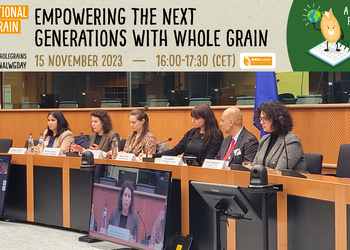
On this year’s International Whole Grain Day, leading experts from policy, education, research, and nutrition came together to consider the idea of “Empowering next generations with whole grain”. The conclusion of the event was clear: whole grain is key to better health and a sustainable future. But how can we translate this knowledge into action?


PLANTING SEEDS FOR A HEALTHIER FUTURE


The nutritional superiority of whole grains was emphasized by Peiman Milani, from the The Rockefeller Foundation who pointed out that whole grains are, on average, “three times more nutritious than their refined counterpart”. Echoing this, Professor Marco Springmann from EAT Lancet and University of Oxford University added “about 2 million people each year die from dietary-related diseases related to low intake of whole grain.” He reminded the audience that the EAT-Lancet report recommends eating over 200g of whole grains per day. Springmann emphasised that acquiring healthy food behaviours, including the incorporation of whole grains, in childhood, significantly increases the likelihood of maintaining a balanced diet in adulthood, acting as a protective measure against diet-related diseases.


Despite robust scientific evidence supporting the health benefits of whole grains, a significant number of people, both adults, and children, currently don’t have enough whole grain in their daily diets. This is mainly due to a lack of awareness about whole grains and uncertainty on how to integrate them into meals.


If we’re to increase the amount of whole grain in diets, one concrete step is giving children, and those responsible for their wellbeing, the tools they need to understand the importance of whole grains.


FOSTERING WHOLE GRAIN LITERACY IN CHILDREN

Overcoming this nutritional gap requires educational efforts and a shift in mindset, encouraging simple dietary changes. Recognising the need for action, Manuela Ripa, Member of the European Parliament suggested “actively advocating for nutritious, healthy and sustainably produced food consumption, implementing educational programs within our schools.” She noted, “we have the opportunity to empower future generations that we should not miss”.


Fatima Hachem from Food and Agriculture Organisation of the UN (FAO) emphasised that “nutrition education needs to be integrated within the school system and food system”, stressing that “school meals present a valuable opportunity for children to learn about heathy and sustainable diets”. Ioanna Bakogianni from the EU Science, Research and Innovation shared some examples of school food policies focused on enhancing whole grain intake in meals. She emphasised the importance of integrating whole grain into the food procurement process of schools, ensuring an increased inclusion of whole grain portions in school meals.


Camilla T. Damsgaard from the Københavns Universitet - University of Copenhagen explained that, in Denmark, including nutritional education into the curriculum and working with canteen staff to offer whole grain options, had helped ensure children are equipped with the knowledge and choices that promote healthier habits.


Peiman Milanishared a success story from Rwanda, where, following a large pilot in a school meal programme, children - and in some cases, families as well - displayed an increased interest in and preference for whole grains. This highlights the positive impact of incorporating whole grains into school meal programmes and the potential for shaping healthier dietary preferences from a young age.


EQUIPPING PARENTS WITH TOOLS TO IDENTIFY WHOLE GRAIN

Parents play a crucial role in shaping their children’s dietary habits and clear labelling is key in assisting them. As Manuela Ripa MEP noted, front-of-pack labels “help parents make informed and healthy choices”. Sara Lamonaca from FoodDrinkEurope advocated for “campaigns to raise awareness about the health benefits of whole grain consumption” promoting the availability of products with higher whole grain content in the market. She called for labels to “empower consumers to identify products having a higher content of whole grain”. Labelling is not just informational, it’s a tool parents can use to identify and choose whole grain products as they shop, making it easier for them to add whole grains into their daily meals.


The panel heard from Camilla T. Damsgaardabout the positive impact of the Keyhole and Whole Grain logos in Denmark. These labels were not only a source of information for consumers but also encouraged food manufacturers to rethink the way they made their products. Specifically, she pointed to a positive shift in breakfast cereals, where “gradually the sugar content went down and the whole grain content went up”. This demonstrates how labels can catalyse positive changes in product recipes, ultimately contributing to healthier dietary choices.


OUTLINING HOW MUCH WHOLE GRAIN IS ENOUGH

Helping parents and children understand where they can find whole grain is just the first step. It’s also important that people understand how much whole grain they should have in their diet. Ioanna Bakogianni supported the idea of incorporating whole grain into existing food-based dietary guidelines.


Clear guidelines on how much whole grain should be eaten daily would guide parents and help them make informed decisions, ensuring that their children receive the optimal nutritional benefits without the need for guesswork.


A HEALTHIER TOMORROW FOR NEXT GENERATIONS

The message is clear: integrating whole grain into our diet – no matter our age – is an investment in our long-term health and the sustainability of our food systems. With concerted efforts in education, clear labelling, and dietary guidance, we can empower both children and their parents to make whole grains a staple of their daily diet. This is more than a simple dietary shift; it’s a step towards a healthier, more sustainable future.


Curious to learn more? You can access the recording of the “Empowering new generations with whole grain” event at this link.

Update from 3rd ICC Asia-Pacific Grain Conference, Henan University of Technology

Update from 3rd ICC Asia-Pacific Grain Conference, Henan University of Technology

15 December 2023

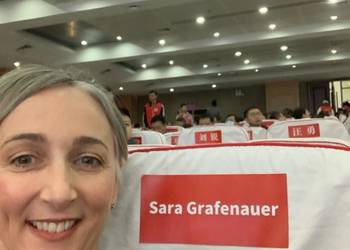
Just over 500 registrants gathered in Zhengzhou, China for the 3rd Asia-Pacific Grains Conference. The Whole Grain Initiative was well represented with both Jan Willem van der Kamp and Sara Grafenauer presenting in the opening session. Jan Willem presented online and gave an excellent overview, emphasising the new definition as there is interest in China regarding regulation and Sara presented the nutrition economics work from Australia, the US and Finland, showing significant healthcare cost savings. As there are difficulties in changing dietary patterns in Asia, where the grain choice is often refined, there were questions as to how to move towards more whole grains. It is important that families with young children start by introducing whole grains where permitted and while this may not be in main meals (with brown rice), snacking may be an opportunity that could be effectively utilised in Asian diets. 


In addition to the presentation in the opening, there was also a Whole Grain session with Rikard Landberg presenting on a range of whole grains, particularly oats and rye and studies related to gut health, heart health markers, liquid and flake oat comparisons and the results of the MEDGICarb-study with the most recent results showing that women, compared to men, are more sensitive to the metabolic effects of the dietary Glycaemic Index. Dr. Fang Yong from the Nanjing University of Finance and Economics and Dr. Liu Liya from the Chinese Academy of Agricultural Sciences both presented on whole grain topics as well.


In total, there were 179 presentations and 26 posters with prizes awarded across a range of metrics. In order to continue the momentum around whole grains seen at the conference, the Whole Grain Initiative will form a special group to focus more on diets in Asian countries, bringing together a group of experts.

The Whole Grain Initiative’s Governing Board has elected Caroline Sluyter, of the American-based Oldways Whole Grains Council, as its next chair. Caroline has a strong background in whole grain advocacy, whole grain labelling, nutrition, and program management, all of which will serve her well in this role.
Featured

Introducing Our New WGI Governing Board Chair, Caroline Sluyter

15 December 2023

The Whole Grain Initiative’s Governing Board has elected Caroline Sluyter, of the American-based Oldways Whole Grains Council, as its next chair. Caroline has a strong background in whole grain advocacy, whole grain labelling, nutrition, and program management, all of which will serve her well in this role. She has chaired the Communications & Partnerships working group since 2018 and been an active member of the Governing Board since its formation. Caroline is eager to lead the WGI team in this next chapter!

This change in leadership comes with the departure of former chair, Kevin Miller, as he moves into a new role at the Gates Foundation. The Governing Board is incredibly grateful for Kevin’s steadfast and passionate leadership over the past several years, and all the work he did fostering strong partnerships and fruitful collaboration. Many thanks for all your contributions, Kevin!

International Whole Grain Day 2023

International Whole Grain Day 2023

17 November 2023

The International Whole Grain Day 2023

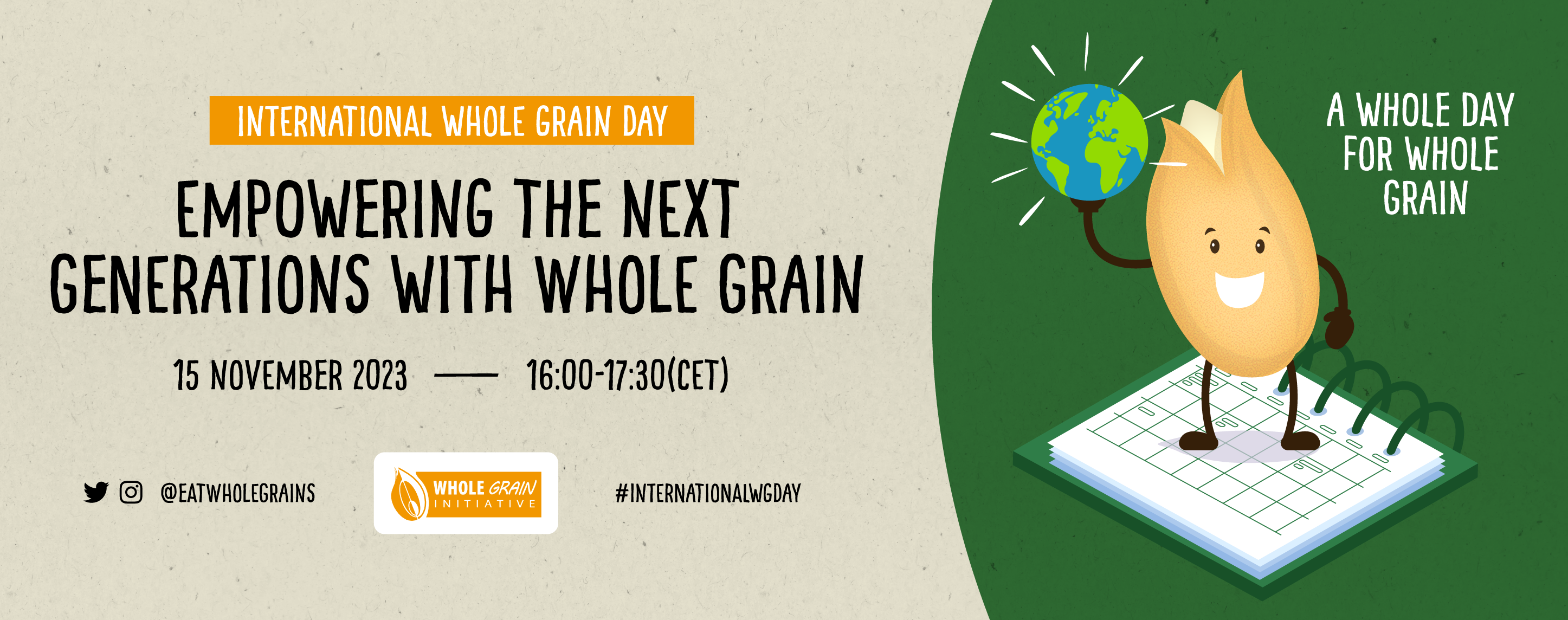
Empowering the Next Generations with Whole Grain

15 November 2023 — 16:00 - 17:30 (CET)


A diet low in whole grains is the second greatest dietary risk factor for death according to the 2017 Global Burden of Disease study, and yet whole grain consumption continues to fall well below recommended levels in most parts of the world. Whole grains are key to healthy diets at every stage of life, and research shows that introducing whole grains at a young age helps establish healthy habits that can last a lifetime. Whole grains are also an excellent sustainable food choice – they have minimal environmental impact, are nutritionally dense and weather resilient, and can be stored for long periods, making them a natural staple of most diets around the globe. 


On 15 November 16:00-17:30 CET, the WGI and a host of global leaders will convene at the EU Parliament to explore the vital role of educating children and young people about the benefits associated with whole grain consumption and ways to inspire them to integrate these nutritious choices into their daily diets.


The discussion has been live-streamed, and we encourage you to tune in below! Please the slide deck HERE and watch the recording HERE.


WGI - *New* Whole Grain Working Group - Intake Recommendation

WGI - *New* Whole Grain Working Group - Intake Recommendation

27 March 2023

The Whole Grain Initiative is announcing the formation of a working group with the goal to identify a recommendation for whole grain intake.

Dr. Eleanor Beck, Head of School of Health Sciences University of New South Wales in Australia, has agreed to kick off the discussions.

Although the group will decide the best approach – they will determine the basis for a recommendation, identify the science to support, and then make the recommendation.

There may even be potential for some novel research in one or more regions to generate data or model impact of decisions.

If you would like to join, or know someone who should, be invited to the kick-off – then please contact office@wholegraininitiative.org for inclusion in the participant list.

The WGI is looking forward to make progress on this important issue and the advocacy that follows to encourage adoption!

15 November 2022: International Whole Grain Day - Save the date!

15 November 2022: International Whole Grain Day - Save the date!

17 August 2022

On Nov. 15th, 3:30-5:00 PM CET the WGI and a host of global leaders will discuss how the daily consumption of whole grains is a vital part of not only healthy, but also sustainable diets. Soon the programme will be published and registration will be opened. We invite you to participate in this webinar and spread the word throughout your organization and network.

WGI - New publication on Nutrients

WGI - New publication on Nutrients

10 January 2022

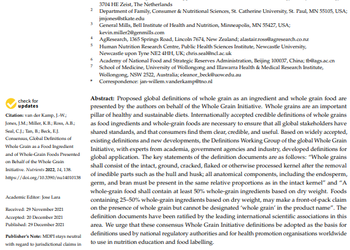
The Whole Grain Initiative has published a global consensus definition of whole grain as an ingredient and whole grain food in the journal Nutrients (December 29, 2021), https://www.mdpi.com/2072-6643/14/1/138. 

Read more …
WGI - Food Policy Working Group - OPEN LETTER to the European Commission

WGI - Food Policy Working Group - OPEN LETTER to the European Commission

29 November 2021

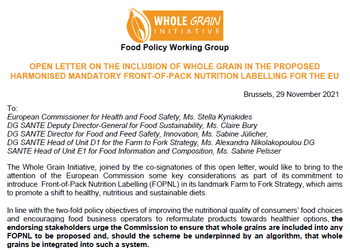
The Whole Grain Initiative, joined by the co-signatories of this open letter, would like to bring to the attention of the European Commission some key considerations as part of its commitment to introduce Front-of-Pack Nutrition Labelling (FOPNL) in its landmark Farm to Fork Strategy, which aims to promote a shift to healthy, nutritious and sustainable diets.

Read more …
9 November 2021: Whole Grains - A Game Changer for Public and Planetary Health

9 November 2021: Whole Grains - A Game Changer for Public and Planetary Health

28 October 2021

We are delighted to invite you to join our virtual policy roundtable, 'Whole Grains: A Game Changer for Public and Planetary Health – Can the Slovenian experience inspire Europe to address its leading dietary risk factor? ' on 9 November 2021 from 14:00 to 15:55 (CET).

Read more …
16 November 2021: International Whole Grain Day Sign up today!

16 November 2021: International Whole Grain Day Sign up today!

08 October 2021

On Nov. 16th, 3:30-5:00 PM CET the WGI and a host of global leaders will discuss how the daily consumption of whole grains is a vital part of not only healthy, but also sustainable diets. Watch out the programme and register here. We invite you to participate in this webinar and spread the word throughout your organization and network.

7th Whole Grain Summit - Discover the programme and register!

7th Whole Grain Summit - Discover the programme and register!

30 September 2021

Take this opportunity and register to the 7th Whole Grain Summit "From Science to Global application", which will be held as an online event on 25-27 October.  The WGS2021 intends to seek ideas and ways to translate the available scientific and technological knowledge into global application, resulting into an increase in availability of affordable and acceptable whole grain products in a diversity of markets. Dicsover the programme!

Join the Summit and meet colleagues from all around the globe!

Find all further details about the event any time at the WGS website!

US Whole Grains Month – September 2021

US Whole Grains Month – September 2021

05 August 2021

This marks the 11th annual US Whole Grains Month celebration put on in September by the Oldways Whole Grains Council, and the 2nd iteration of the Grainies Award challenge, brought back by popular demand after great success last year. This fall the WGC is rolling out the red carpet and rewarding consumers for their participation in a wide range of whole grain challenges.

Read more …

Page 2 of 5

  • 1
  • 2
  • 3
  • 4
  • 5

Latest News

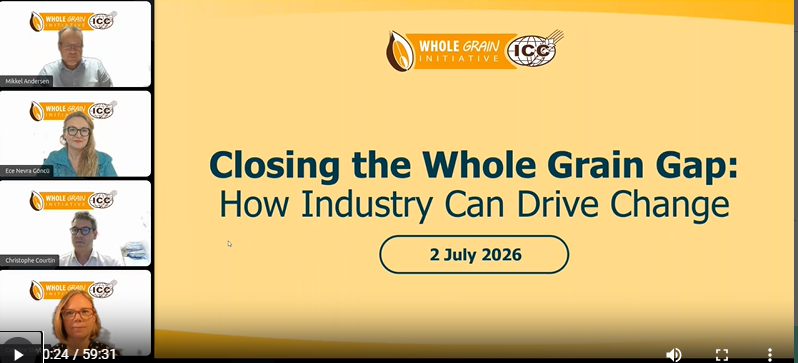
Follow-up Report the ICC WGI webinar "Closing the Whole Grain Gap: A Webinar for Industry Leaders on How to Drive Change", 02 July 2026

09 July 2026

New ISO Standard Sets Global Benchmark for Whole Grain

19 June 2026

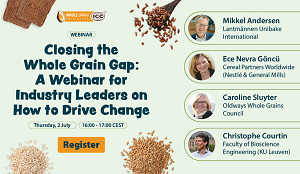
Join the ICC WGI webinar "Closing the Whole Grain Gap: A Webinar for Industry Leaders on How to Drive Change", 02 July 2026

16 June 2026

Join the upcoming ICC WGI Members Event on June 15, 2026 | 1–3 pm CEST

13 May 2026

Address: WGI is coordinated by ICC - International Association for Cereal Science and Technology   Phone: +43170772020    Email: office@wholegraininitiative.org
Disclaimer - Privacy - Login

Wholegrain Initiative
  • Home
  • About Us
  • Declaration
  • Working Groups
    • WG 1 Food Policy
    • WG 2 Processing, reformulation, SC management
    • WG 3 Communication
    • WG 4 Economic Evaluation and Affordability
    • WG 5 Asia-Pacific region
    • Special Project on Whole Grain and Sustainability
  • Whole Grain Day 2025
  • News
  • Partners
  • Publications
  • Join Us
  • Search