The publication of ISO 20810:2026 marks a major milestone for public health, nutrition policy and consumer transparency worldwide.
The publication of ISO 20810:2026 marks a significant milestone for global nutrition, providing the first internationally harmonized definition of whole grain and clear criteria for whole-grain labelling.
The new standard establishes a science-based framework for defining, calculating, and communicating whole-grain content in foods. It aims to improve transparency for consumers while supporting consistent policies and product development across countries. The ICC Whole Grain Initiative played a key role in advancing this achievement.
Regular whole-grain consumption is strongly linked to better health outcomes, including a reduced risk of type 2 diabetes and cardiovascular disease. However, intake levels worldwide remain well below recommendations.
By addressing inconsistent definitions and labelling practices, the ISO standard creates a foundation for coordinated action. Governments, industry, and public health stakeholders are now encouraged to integrate the standard into dietary guidelines, labelling systems, and food policies to help increase whole-grain consumption.
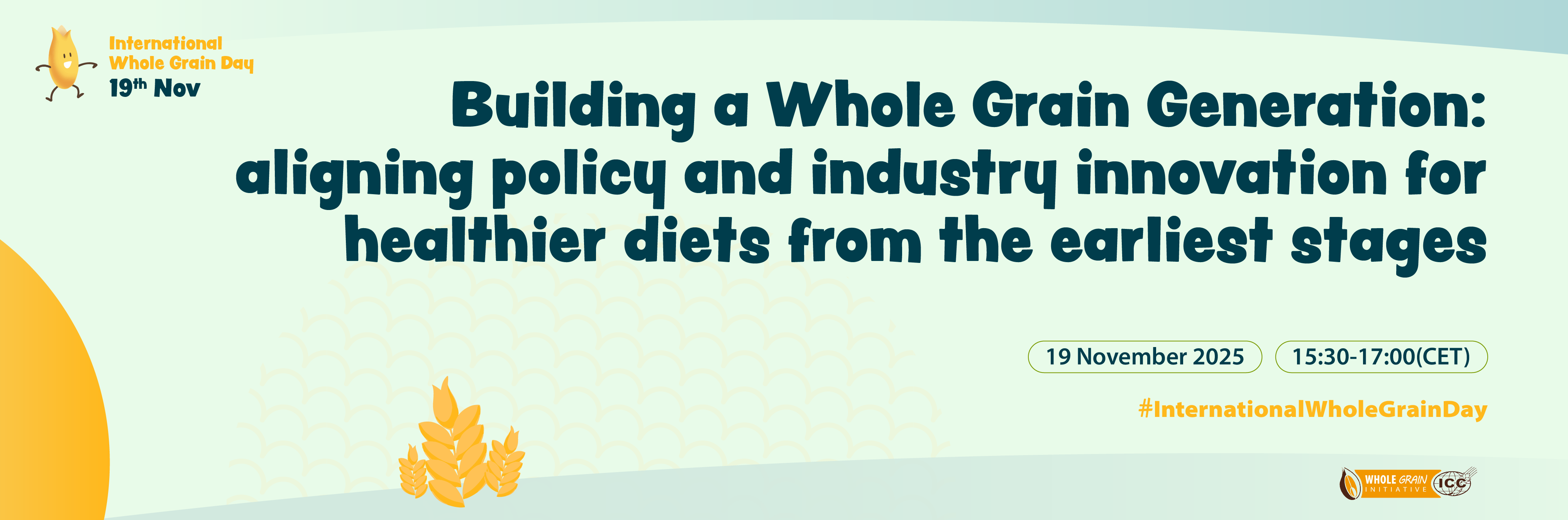
The standard will be highlighted during International Whole Grain Day on 19 November 2026, reinforcing global efforts to make whole grains more accessible and better understood and organized by the ICC Whole Grain Initiative.
See further the ISO Newsletter.
Read also: New ISO Standard Lays the Groundwork for a Whole Grain Generation
More information on wholegrain benefits are available on the ICC Whole Grain Initiative website.